6 short lessons that teach you to step out of the judge's role, give your children tools to solve fights on their own, and keep your own calm even when the house is loud.
The lessons are spoken in Hebrew, with full English subtitles and English drawings.
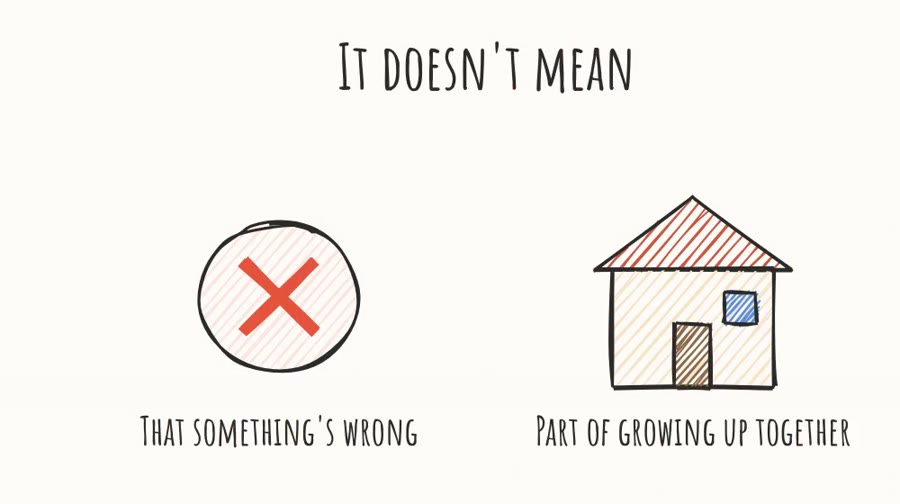
Siblings fight. Almost all of them, almost all the time, and it doesn't mean something is wrong in your home. The goal isn't a home without fights, but fights that are less harsh, less dangerous, and ones the children learn to solve on their own. And you can learn how.
Picture two children standing on opposite sides of a valley, each sure they're right. You can't just tell them "make peace". They need tools, practice and a child's language. Our job is to help them build a bridge of four planks: calm down, each one tells and each one listens, put into words what each one needs, and find a solution that works for both. At first you walk them across every plank, and over time they learn to cross on their own.
I'm sure you can find a solution. If you need help, I'm here.
Every lesson ends with one tool you can try that same evening, and a short task for the week.

A clinical social worker and college lecturer in child development. For more than fifteen years he has led a center for attention, concentration and behavior difficulties in children, with parents coming from Israel and abroad. In this course he brings what he teaches parents in his clinic, in short lessons you can watch in the evening, after the kids are asleep.
The payment link will be connected soon.
Full refund within 14 days, no questions asked. Details
Payment is made on the payment provider's secure page. A receipt is sent to your email automatically.
Right after payment you go to a page with all six lessons. Watch on your phone or computer, as many times as you like.
For parents of children aged 2 to 12. The principles are the same, and the lessons include examples for different ages and for age gaps between siblings.
We do, but not as judges. In the second lesson I explain how to describe instead of ruling, and when to step in right away: when there's danger, hitting, or a child who can't protect themselves. In the fifth lesson I go into what to do when someone gets hurt.
A method I've developed over the years and teach in schools. In the third lesson I show how it works between siblings: four planks that help children move from fighting to cooperation, and over time cross the bridge on their own.
Send me an email: [email protected]